

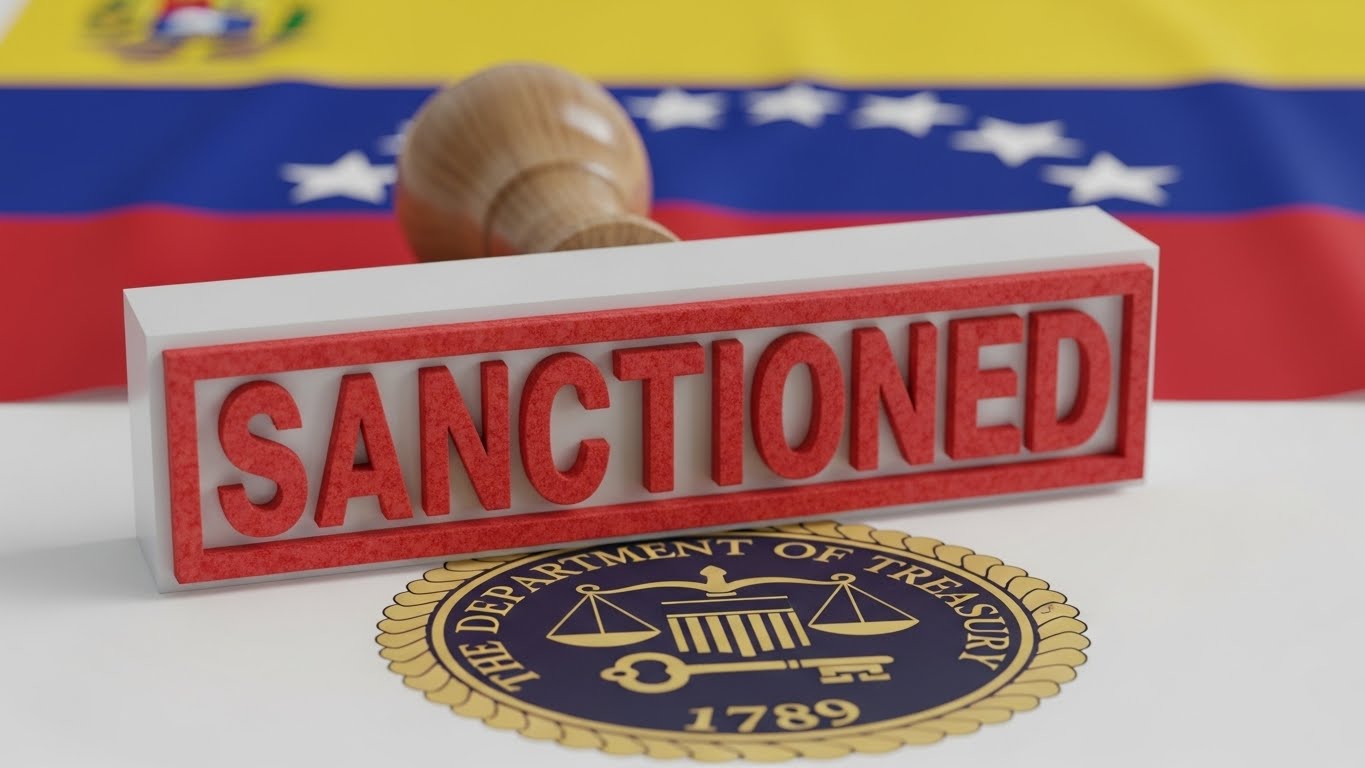
U.S., Venezuela Conflict Reaches Boiling Point in Wake of OFAC Sanctions
In yet another escalation of the Trump Administration’s war on transnational crime, the U.S. Department of the Treasury has unleashed a fresh wave of sanctions targeting the notorious Venezuelan gang Tren de Aragua (TdA). The organization, which emerged from the irreputable depths of Venezuela’s Tocorón prison in the early 2010s, has since extended the reach of its destabilizing activities across much of the western hemisphere, evolving into a major negative force blending significant crimes such as narco-trafficking, human smuggling, extortion, and murder-for-hire for personal profit. Of particular interest to the U.S. government has been the group’s growing presence along the U.S. border, with TdA preying on migrants who have gained unprecedented access to the American ecosystem since 2020, while promoting drug trafficking across the southern border and fueling the greater trends of violence seen in major metropolitan U.S. cities such as Chicago and New York over recent years.
As the group’s influence across South and Central America has spread into North America, U.S. officials have begun to take decisive action to disrupt their criminal operations over the past year. While domestic government agencies such as the U.S. Treasury’s Office of Foreign Assets Control (OFAC) had previously sanctioned the group as a significant transnational criminal organization in 2024, effectively blocking any U.S. assets and prohibiting transactions with all U.S. persons (citizens, residents, or companies), a more decisive blow was levied by Trump this February when the U.S. Department of State officially designated TdA as a Foreign Terrorist Organization (FTO), stigmatizing and isolating the group at the international level while granting additional counter-terrorism tools to the U.S. government to disrupt the organization’s activities and financial flows. This label is also significant in that it helps to mobilize cooperation with foreign allies for more effective prosecution of TdA higher-ups, and allows U.S. agencies to treat support for the group as “material support for terrorism,” which carries harsher penalties than typical criminal aid provided by foreign adversaries.1 Shortly following the new designation, the U.S. Department of Justice also announced RICO, drug-trafficking, sex-trafficking, robbery and firearms charges against 27 individuals alleged to be TdA members or associates — the first major U.S. RICO takedown tied to the group.
All told, the moves taken against TdA to date also have broader implications on the ongoing military and diplomatic conflict developing between the two countries, this as President Trump continues to pressure the government of embattled Venezuelan leader Nicolás Maduro. U.S. officials have claimed that their goal with respect to the actions taken thus far – which aside from these designations has also included targeted air strikes on boats linked to Venezuelan drug traffickers operating in international waters – is to better combat global drug trafficking and protect U.S. national security interests. Venezuela on the other hand has contended that the U.S. actions amount to a campaign to force regime change. In wake of the latest developments, the Trump administration has publicly alleged ties – including potential facilitation and even direction on the group’s activities with particular respect to their border-related activities – between elements of the Maduro regime and TdA. Maduro has rejected these claims, as well as U.S. demands for immediate resignation, and currently remains at large.
At the center of the action taken on December 3rd are somewhat surprising figures in the grand scheme of this conflict however. Among those sanctioned includes a network of entertainers, most notably well-known Venezuelan DJ and actress Jimena Romina Araya (“Rosita”) Navarro who herself is accused of funneling nightclub profits and laundering cash to fund the gang’s brutal operations. The 42-year-old social media sensation boasts millions of international followers, and a U.S. investigation into her activity has revealed that she has long been using her presence as a model, actress, and DJ to mask deeper ties to TdA’s illicit activities, as well as her close personal relations with the group’s kingpin. Further investigation into the group revealed that it was Navarro herself who orchestrated the 2012 prison break of Hector Rusthenford Guerrero Flores – the gang’s sanctioned leader and her reported romantic partner. The U.S. investigation also alleges that Rosita’s performances at upscale venues across South America allegedly double as TdA fundraisers – with the proceeds from anything from ticket sales for these events to on-site drug peddling at them funneled directly Guerrero and other gang bosses.
Also sanctioned in the latest OFAC directive was Rosita’s accomplice, Eryk Manuel Landaeta Hernandez, TdA’s former Bogotá finance chief, owned the club and production firm Eryk Producciones SAS. Until his October 2024 arrest by Colombian police, Hernandez hosted star-studded, narcotics-laced parties that laundered millions for the gang, including for senior leader Giovanni Vicente Mosquera Serrano.2 Rosita also fronts Global Import Solutions S.A., a Venezuelan shell company now blocked under the sanctions. Both individuals and their entities face asset freezes and U.S. transaction bans under Executive Orders 13581 and 13224, which target terrorist financiers and criminal networks.2
The OFAC action also encompasses four other industry figures wrapped in this widespread money-laundering web who were exposed as part of an evaluation of TdA’s hierarchy. Kenffersso Jhosue Sevilla Arteaga (“El Flipper”), Guerrero’s right-hand until his November 2025 Colombian arrest, ran extortion rackets across seven countries via his firm Yakera y Lane SAS. Venezuelan cell leaders Richard Jose Espinal Quintero, Noe Manases Aponte Cordova, and Asdrubal Rafael Escobar Cabrera, plus Guerrero’s half-brother Cheison Royer Guerrero Palma – who spearheaded the group’s expansion into Chile – also join the blacklist. The Treasury’s actions now sync with a recent State Department bounty hike: up to $5 million for tips nabbing Mosquera Serrano, amplifying the search for TdA’s elusive commanders. Joint efforts with the DEA, FBI, and Justice Department’s Task Force Vulcan, plus multiple international allies, have contributed to the increase in information amassed as part of these investigations, but these efforts have yet to see those running the operations brought to justice.
“Under President Trump, barbaric terrorist cartels can no longer operate with impunity across our borders,” declared Treasury Secretary Scott Bessent in the announcement. “At the direction of President Trump, we will continue to use every tool to cut off these terrorists from the U.S. and global financial system and keep American citizens safe.” As TdA’s shadow looms over the Americas, these measures signal some degree of resolve. Rosita’s fall from Bogotá’s party scene to the SDN List epitomizes the administration’s message: no one is safe from exposure for criminal wrong-doing. With Trump continuing to maintain border security as a top national priority, expect more heat on gangs like TdA, whose U.S. incursions have contributed to the destabilization of the southern border and beyond.
Citations
- The Foreign Terrorist Organization (FTO) List. United States Congressional Research Service, 2025. gov
- Treasury Targets Money Laundering Network Supporting Venezuelan Terrorist Organization Tren de Aragua.S. Department of the Treasury, 3 Dec. 2025. home.treasury.gov